Reaching those with addictions...ONE AT A TIME !
— Research‑Based Insights: What the Data Actually Shows About Long‑Term Recovery
For decades, recovery conversations have been shaped more by tradition than by data. But today, we have access to research that paints a clearer picture of what actually leads to long‑term sobriety — and what doesn’t. When we look honestly at the numbers, a pattern emerges: recovery is possible, but it rarely happens through willpower alone, and it almost never happens through a single pathway.
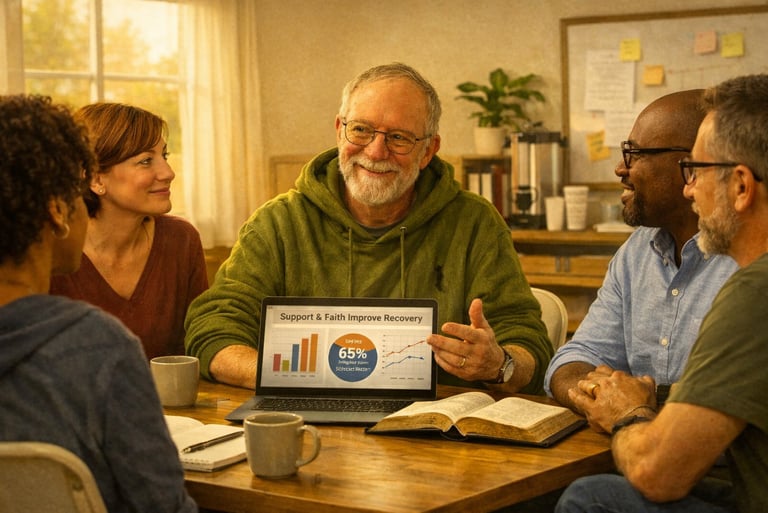
Studies consistently show that long‑term sobriety is most likely when a person experiences multiple layers of support — physical, emotional, relational, and spiritual. People who rely on only one method, one meeting, or one model tend to struggle more than those who build a holistic foundation.
The data also reveals something deeply hopeful: people who integrate faith, community, and purpose into their recovery journey have significantly higher rates of long‑term transformation. This doesn’t diminish the value of clinical tools or peer support; it simply acknowledges that human beings are spiritual creatures, and healing reaches its fullest expression when the soul is addressed alongside the body and mind.
Research doesn’t replace faith — it confirms what Scripture has said all along: People change when their hearts change. And that change is most powerful when Christ is at the center.
📌Disclaimer:
The content on these pages is for spiritual encouragement and educational purposes only and is not a substitute for professional counseling, therapy, or medical treatment.
Receive hope and healing stories monthly by email
info@cornerstonetorecovery.org
Reach out anytime with your questions—we’re here to support your healing journey.
© 2026 Cornerstone to Recovery Ministries.
All rights reserved.
pastortommy@cornerstonetorecovery.org